



















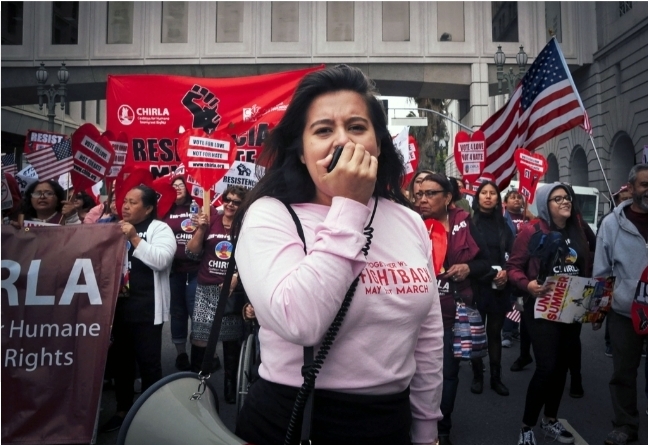
In a revelation sparking widespread debate, independent journalist Cam Higby has accused the California state government of channeling over $115 million in taxpayer dollars to the Coalition for Humane Immigrant Rights (CHIRLA), an organization he claims primarily organizes protests and left-wing advocacy. The allegations, posted on X (formerly Twitter) on February 21, 2026, have ignited calls for audits and refunds, highlighting tensions over public funding for nonprofit activities in a state grappling with budget deficits and immigration policy battles.Higby’s thread, which garnered over 1.3 million views within hours, includes screenshots from California’s state expenditure database showing multiple payments to CHIRLA, totaling approximately $115.1 million.
 He argues that these funds subsidize CHIRLA’s protest-related efforts, including anti-ICE demonstrations, Black Lives Matter support, and Get Out The Vote (GOTV) initiatives that he suggests border on electioneering. “California is using taxpayer funds to subsidize non-profit organizations whose core function is to organize protests,” Higby wrote, pointing to CHIRLA’s website and social media as evidence of their activism focus.CHIRLA, founded in 1986 with initial funding from the Ford Foundation to educate immigrants on the Immigration Reform and Control Act, describes itself as a leader in advancing immigrant rights.
The Los Angeles-based group provides a range of services, including legal aid for deportation defense, DACA applications, wage theft claims, and disaster relief. Their mission emphasizes “freedom of mobility, full human rights, and true participatory democracy,” and they advocate for state policies that integrate immigrants, such as expanded access to education, healthcare, and COVID-19 relief. CHIRLA has also been instrumental in pushing for laws like in-state tuition for undocumented students and consumer protections against immigration scams.Financial disclosures reveal CHIRLA’s heavy reliance on government grants. In fiscal year 2023, the organization reported $47 million in revenue, with $33.9 million coming from government sources. Independent audits by groups like Open The Books indicate that between 2023 and 2024 alone, California allocated $73.6 million to anti-deportation organizations, including $35 million to CHIRLA. Cumulative state funding since 2021 exceeds $100 million, supplemented by federal grants, such as a $450,000 award from the Department of Homeland Security for citizenship and naturalization services.
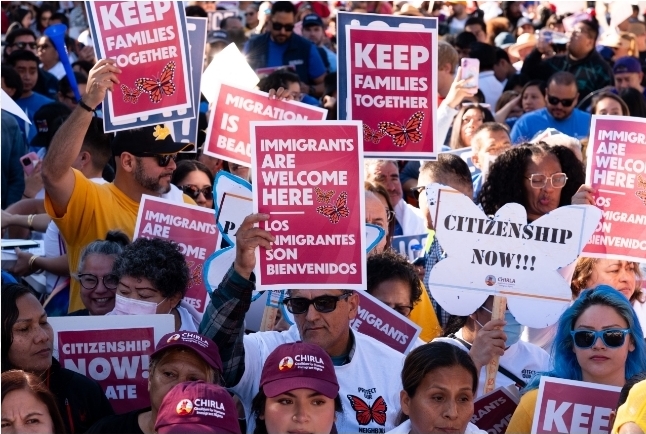
CHIRLA has partnered with the state on programs like the Disaster Relief Assistance for Immigrants (DRAI), distributing aid to undocumented residents ineligible for federal support. Critics, including Republican lawmakers and commentators, contend that this funding loop creates conflicts of interest. CHIRLA’s political action committee, Immigrant Power PAC, donated nearly $500,000 to oppose Governor Gavin Newsom’s 2021 recall effort, with executive director Angelica Salas serving as treasurer. Assemblywoman Kate Sanchez has demanded a legislative audit, stating, “There is zero excuse for our tax dollars to go towards these riots.” Higby echoes this, suggesting that without access to CHIRLA’s books, it’s unclear if funds were used for potentially illegal election activities. Other voices, like fitness personality Jillian Michaels and conservative activist Brandon Straka, have amplified the claims, alleging a broader pattern of taxpayer money funding “far-left activism” and paid protesters earning $80,000 to $120,000 annually.

On the other side, CHIRLA maintains that its work is non-violent advocacy and essential community support. The organization credits itself for influencing Newsom’s policies, such as $175 million in COVID relief for immigrants, but frames these as investments in California’s economy—where immigrants contribute $34.3 billion in spending power and $4.3 billion in taxes annually. No official response from CHIRLA to Higby’s specific allegations was available as of press time, though past statements deny wrongdoing and emphasize legal compliance.
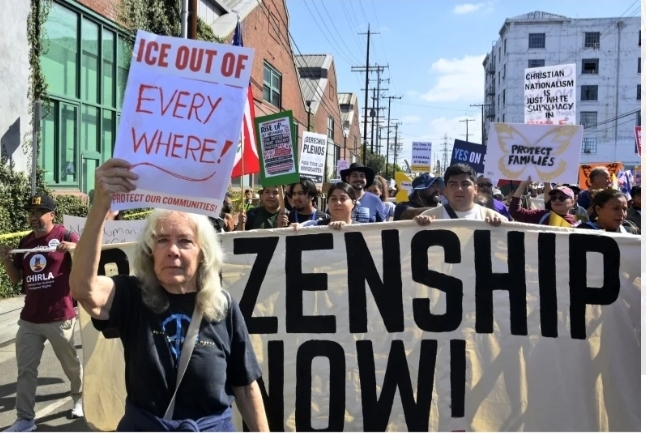
Governor Newsom’s office has not commented directly, but his administration has defended similar funding as vital for immigrant integration in a state where one in four residents is a foreign born.
For stakeholders, the implications are multifaceted. Taxpayers and businesses may question the return on investment amid California’s $68 billion budget shortfall, especially if funds are perceived as subsidizing political activities rather than direct services. Immigrant communities, however, benefit from CHIRLA’s programs, which address gaps in federal aid and promote workforce participation. Analysts note that while nonprofits like CHIRLA can engage in advocacy, strict rules prohibit using government grants for lobbying or elections—violations could trigger federal investigations.

As calls for transparency grow, with figures like Nicki Minaj labeling it “shocking” and others dismissing it as “organic” activism, this scandal underscores the blurred lines between public funding and political influence.
Stakeholders Magazine will continue monitoring developments, including any potential audits or legal actions.