



















During President Donald Trump’s State of the Union address to a joint session of Congress on February 24, a pointed moment highlighted sharp partisan divisions over immigration policy.Midway through the speech, Trump challenged lawmakers to stand if they agreed with the statement:
“The first duty of the American government is to protect American citizens, not illegal aliens.”
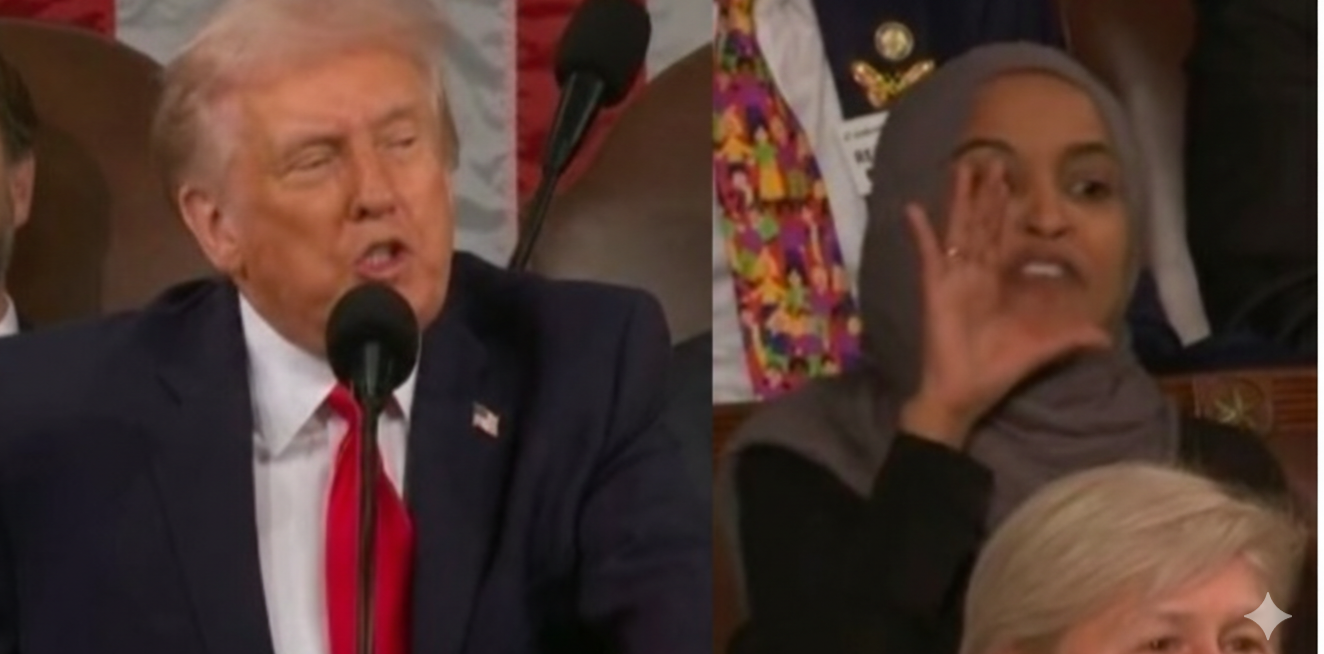
 Republicans rose to their feet in sustained applause, while Democrats remained seated.Speaking over interruptions from the Democratic side, Trump remarked,
“Isn’t that a shame? You should be ashamed of yourself, not standing up.”

The exchange grew heated as several Democrats voiced objections. Rep. Ilhan Omar (D-Minn.) repeatedly shouted, “You have killed Americans!”—referring to incidents in January where two U.S. citizens, Renee Good and Alex Pretti, were fatally shot by federal immigration agents during enforcement operations in Minnesota. Rep. Rashida Tlaib (D-Mich.) and others also interjected, with some lawmakers protesting Trump’s characterizations of immigrant communities and his broader immigration enforcement actions.
 The president, continuing his remarks, emphasized his administration’s border security achievements, including claims of no illegal admissions in the past nine months and the creation of what he described as the strongest border in U.S. history. He criticized Democrats for withholding funding from the Department of Homeland Security amid ongoing disputes over enforcement policies.
 The confrontation unfolded against a backdrop of broader Democratic protests: dozens of party members boycotted the address entirely, opting instead for alternative events in Washington to oppose the administration’s agenda. Some who attended engaged in visible demonstrations, including holding photos of those affected by recent enforcement incidents.Trump’s speech, which lasted nearly two hours—the longest on record—also touched on economic improvements, such as declining inflation and lower gas prices, alongside foreign policy topics like Iran.
 However, the immigration segment drew the most visible partisan friction in the chamber.For business and policy stakeholders, the episode underscores persistent polarization on immigration, which could affect future legislative efforts on border funding, workforce availability in immigrant-dependent industries, and related economic reforms. With midterms approaching, such moments may intensify partisan mobilization and complicate bipartisan negotiations on key issues.