

























ABUJA – In what is being hailed as the most significant fiscal reform of the current administration, the Federal Government of Nigeria has locked in March 27, 2026, for the official “Go-Live” of the National Single Window (NSW) platform. The announcement, made by the Chief of Staff to the President, Femi Gbajabiamila, during a high-level stakeholders’ summit at the State House, signals an end to the era of fragmented trade processes and burdensome bureaucracy.

A Unified Vision for Global Competitiveness
The NSW project is a digital masterstroke designed to integrate Nigeria’s trade ecosystem into a single, seamless portal. Speaking to an audience of ministers and agency heads, Gbajabiamila emphasized that this initiative—championed by President Bola Ahmed Tinubu—is not merely a technical upgrade but a “monumental” transformation of the national economy.
“As the name suggests, it is a single national window as opposed to multiple single windows,” Gbajabiamila noted. “We are reviewing our progress to ensure a transition that is as smooth as it is impactful.”
The 23-Day Countdown: What Happens Next?
With less than a month until the launch, NSW Coordinator Mr. Tola Fakolade detailed the immediate deliverables for the first phase:
* Electronic Cargo Manifests: Automated transmission to agencies, eliminating manual intervention.
* Unified Import Permits: Centralized online processing to reduce turnaround time.
* Harmonized Risk Management: A single system to identify and mitigate trade risks across all borders.
* “Submit Once” Policy: Documents provided by traders will be shared instantly across all relevant agencies, ending redundant paperwork.

The Stakeholder League: A Unified Front
The success of the NSW hinges on the unprecedented synergy between Nigeria’s most powerful regulatory bodies. The meeting saw a rare “all-hands-on-deck” commitment from the nation’s economic drivers:
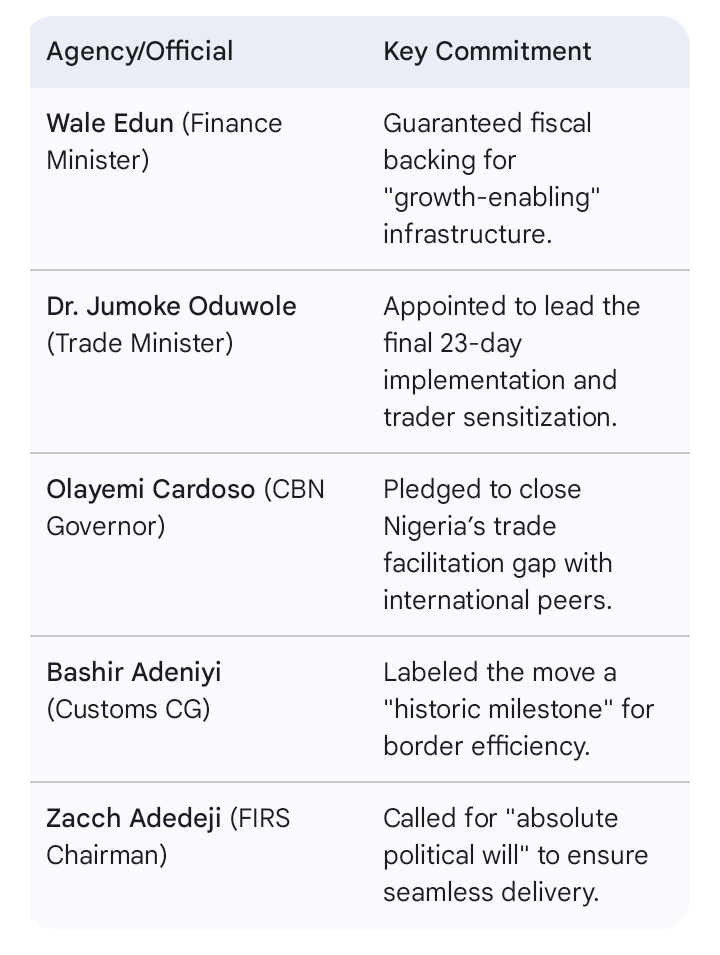
The Impact on the Private Sector
For the Nigerian importer and exporter, the March 27 launch promises a drastic reduction in the “Cost of Doing Business.” By digitizing the interface between the Nigeria Customs Service, NAFDAC, SON, NIMASA, and the NPA, the government aims to turn Nigerian ports into hubs of efficiency rather than bottlenecks of delay. As pilot testing begins and nationwide user training intensifies, the message to the international trade community is clear: Nigeria is open for business, and the window is finally opening.

As we approach the historic March 27 “Go-Live” date, the National Single Window (NSW) Secretariat has been proactive in addressing the technical and operational questions from the trade community. Below is a breakdown of the most critical information for stakeholders, structured as a readiness guide.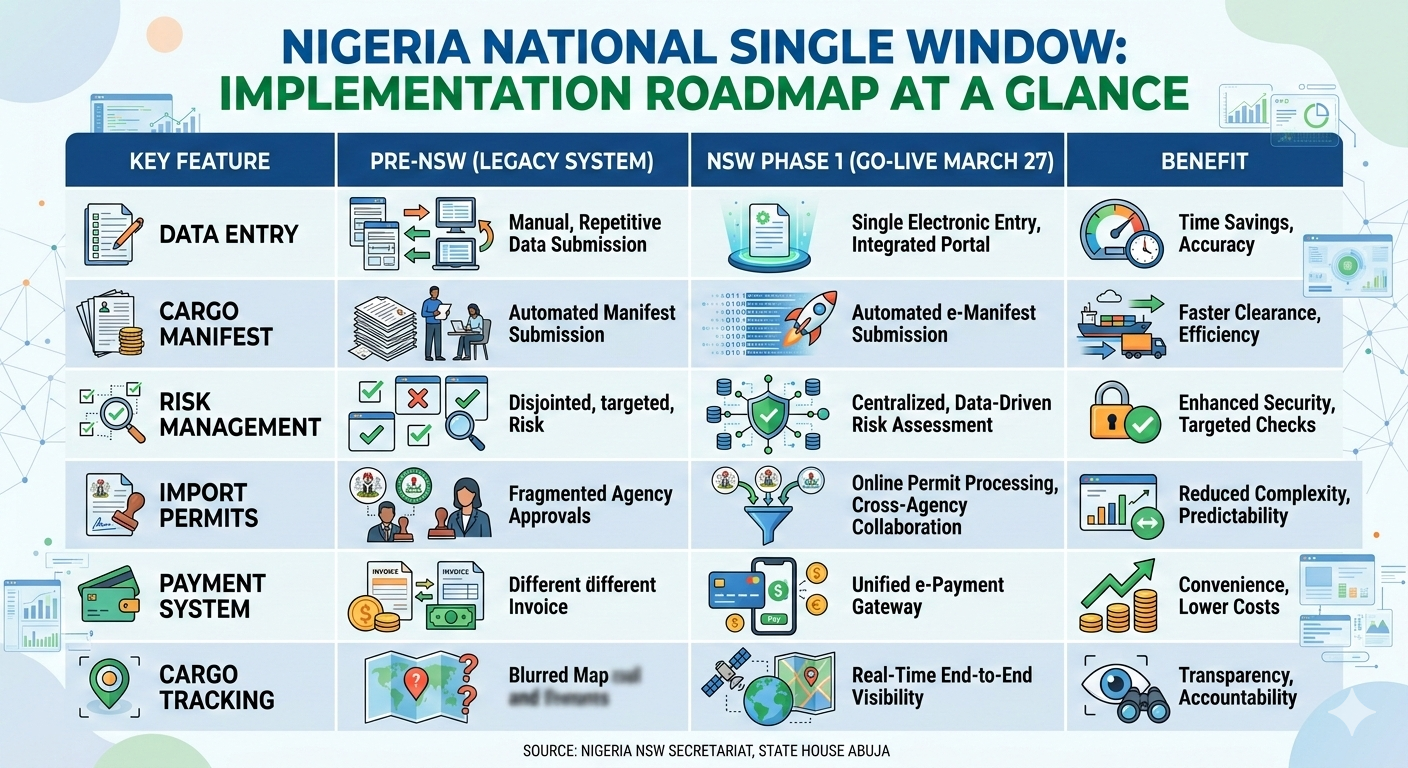
Stakeholder Readiness: Frequently Asked Questions (FAQ)
Q: How do I access the new National Single Window platform? A: Once launched, the primary gateway will be through the official portal at nsw.gov.ng. It is designed to be a one-stop digital interface for all trade-related activities.
Q: What specific processes are included in “Phase 1”? A: The initial rollout focuses on the most critical bottlenecks:
* Import Permits: Online application and approval from regulatory agencies.
* Cargo Manifests: 100% electronic submission with zero human intervention for transmission.
* Risk Management: A centralized system to flag or clear consignments based on harmonized data.
Q: Do I need to visit different agencies for different documents? A: No. The core “Submit Once” principle means you upload your data to the NSW, and it is automatically shared with Customs, NAFDAC, SON, and other relevant bodies simultaneously.
Q: What training is available for my team? A: The NSW Secretariat is currently conducting nationwide end-user training in major hubs including Lagos, Abuja, Kano, and Port Harcourt. Freight forwarders and logistics managers are strongly encouraged to attend these sessions before the March 27 deadline.
Q: How will this affect cargo clearance timelines? A: The government’s target is to reduce clearance times from several weeks to a window of 24 to 48 hours.
Implementation Roadmap at a Glance