






















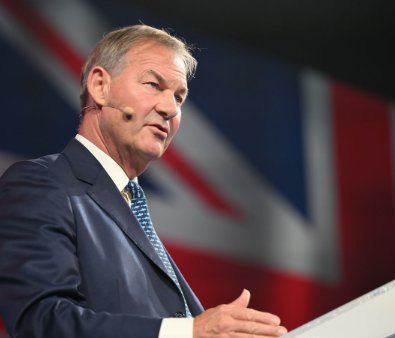
In a dramatic move that has sent shockwaves through Westminster, independent MP and former Reform UK heavyweight Rupert Lowe has formally launched Restore Britain as a full national political party. Just days after the announcement on 13–14 February 2026, the new force is already being hailed by supporters as Britain’s most uncompromising alternative — and scrutinised by critics as a potential vote-splitter on the right.For stakeholders — business executives, investors, community leaders, and policymakers worldwide — this is no fringe development.

With Elon Musk’s high-profile endorsement and policies that promise sweeping tax cuts, radical deregulation, and the largest deportation programme in modern British history, Restore Britain could reshape the UK’s economic landscape, labour markets, and investment climate in the run-up to the next general election.

The Man Behind the Movement Rupert Lowe is no career politician. A successful businessman and former chairman of Southampton FC (1996–2006 and 2008–2009), he entered Parliament in 2024 as Reform UK MP for Great Yarmouth. Suspended from Reform in March 2025 amid a bitter clash with Nigel Farage, Lowe has since sat as an independent. His crowdfunded independent inquiry into grooming gangs — which he described as “the rape of Britain” — exposed systemic failures and hardened his conviction that incremental reform is no longer enough.On Friday night, speaking from his East Anglian farm and later at Great Yarmouth’s Britannia Pier Theatre, Lowe declared:
“Britain does not need tinkering minor reform around the edges… It needs restoration. Full scale restoration. A restoration of courage. A restoration of responsibility.”
 He positioned Restore Britain as an umbrella national party that will partner with local groups (starting with Great Yarmouth First) and field “outsider” candidates — businesspeople, farmers, and professionals — rather than recycled Westminster insiders.
 Core Policies:
Radical, Detailed, and Stakeholder-Focused Restore Britain’s platform is built around three pillars:
1. Immigration & Borders: “Millions Must Go”
The party’s flagship pledge is the most ambitious deportation programme ever proposed in the UK.
Key commitments include: Detention and removal of all illegal entrants within 24 hours.
Abolition of the asylum system. Mass deportations of illegal residents, foreign national offenders, and non-integrating migrants (estimated in the millions).
Net-negative migration: more people leaving than arriving.
A “Red List” of high-risk countries (including Pakistan, Albania, Eritrea, Iran, Syria) with visa suspensions and remittance levies.Closing migrant hotels, using austere detention facilities, and withdrawing from the ECHR to remove legal obstacles.
Stakeholder implications: Businesses reliant on migrant labour could face short-term shortages in sectors such as agriculture, hospitality, and care. Conversely, the “hostile environment” and benefit restrictions for non-citizens may reduce wage suppression and pressure on housing/infrastructure. Remittance taxes could affect financial flows to certain Commonwealth nations.
2. Economy & Taxation: Pro-Enterprise Overhaul
Lowe promises the most business-friendly fiscal package on the British right: Scrap IR35 and inheritance tax. Slash corporation tax to the lowest in Europe, with tax holidays for new manufacturers.
Raise VAT thresholds, cut income and dividend taxes, and “burn down” small-business regulation.
Welfare restricted to British citizens only; work or training required for benefits.
Incentives for British farming, reindustrialization, and domestic energy.
 Stakeholder implications: Lower taxes and lighter regulation could boost investment, entrepreneurship, and retention of UK talent. Family and marriage incentives aim to reverse declining birth rates, addressing long-term labour supply concerns.
3. Culture & National Identity
The party explicitly defends Britain’s Christian heritage, one legal system, and traditional family values. Policies include bans on burqas, halal/kosher slaughter in certain contexts, Sharia courts, and “wokery” in institutions.
 High-Profile Backing and Early Momentum
Elon Musk has publicly endorsed the new party, stating (according to multiple reports and social media):
“Join Rupert Lowe in Restore Britain, because he is the only one who will actually do it!”The endorsement — which some interpret as a snub to Nigel Farage — has amplified visibility. Early polling (pre-launch) showed Restore Britain already hovering around 10% in some surveys. The party plans to contest the next general election with hundreds of candidates and is actively recruiting members and local branches.
 Risks and Opportunities for Stakeholders
 Opportunities Business leaders: Significant tax relief and deregulation could improve competitiveness and encourage domestic investment.
Communities: Emphasis on local referendums for migrant accommodation and “British first” policies may ease pressure on public services.
Investors: A clearer, more sovereign policy environment could reduce political risk if the party gains traction.
Challenges Labour market disruption: Rapid deportation and net-negative migration could create skills gaps.
International relations: Red List measures and remittance taxes may strain ties with key partner countries.
Political fragmentation: As a new entrant on the right, Restore Britain risks splitting the anti-Labour vote, potentially prolonging the current government’s tenure.

The Bottom Line
Rupert Lowe’s Restore Britain is not another incremental pressure group. It is a serious, well-funded challenger promising the scale of change that mainstream parties have repeatedly failed to deliver. Whether it succeeds in “restoring” Britain or fragments the right will be one of the defining stories of the next parliament.For global stakeholders — from Nigerian investors with UK interests to multinational CEOs monitoring European stability — the message is clear: watch this space closely. A party that can deliver tax cuts, border control, and national renewal could transform the UK into a more competitive, cohesive economy. One that fails to build broad support could deepen political volatility.Join the conversation: How do you see Restore Britain’s policies affecting your sector or community? Stakeholders Magazine will continue to track this rapidly evolving story.
Sources include official party materials, BBC, GB News, Daily Mail, and Wikipedia entries updated as of 15 February 2026. Policies are subject to refinement as the party develops its full manifesto.