





















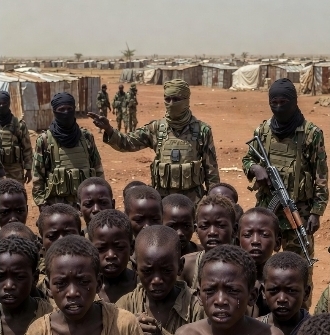
In the dusty villages and sprawling IDP camps of Nigeria’s northeast, a silent war rages not just against soldiers and civilians, but against the very promise of tomorrow. Armed groups like Boko Haram (JAS) and the Islamic State West Africa Province (ISWAP) continue to prey on the most vulnerable: children. In 2024 alone, verified reports from UNICEF documented a staggering 1,120 children—525 boys and 595 girls—recruited and used by these groups in Borno, Adamawa, and Yobe states.These numbers, stark and unforgiving, represent not just statistics, but stolen childhoods, shattered families, and a generation at risk of being lost forever.

A 14-year-old girl abducted from her school in Borno during a midnight raid. For months, she endured forced “marriage,” repeated abuse, and coercion into carrying messages for fighters. Or consider a 12-year-old boy lured with promises of food and belonging amid crushing poverty, only to find himself trained with weapons in an ISWAP camp—featured in their propaganda videos as part of an “empowerment generation.” These are not isolated tales; they echo across communities where insurgency has lingered for over 15 years.

The methods are brutally efficient: mass abductions from schools and villages, exploitation of almajiri systems, and economic desperation that makes recruitment feel like the only path to survival. Boko Haram often deploys children as suicide bombers in indiscriminate attacks, while ISWAP focuses on grooming boys for combat roles, blending ideological indoctrination with tactical training. The UN’s 2024 Children and Armed Conflict report placed Nigeria among the top five nations globally for verified child recruitment cases, underscoring that despite military gains, the cycle persists.Yet amid the darkness, glimmers of hope emerge. UNICEF and local partners work tirelessly on reintegration—providing psychosocial support, education, and vocational training to former child associates. Communities, though scarred by stigma and fear, increasingly embrace survivors when supported. Government initiatives, NGOs, and international donors push for stronger child protection laws and root-cause interventions: better access to education, poverty alleviation, and community resilience programs.

For Nigeria’s stakeholders—business leaders, policymakers, investors, and global partners—the implications are profound. A generation radicalized or traumatized undermines long-term stability, economic growth, and investor confidence in the region. The Lake Chad Basin’s instability spills over into migration, food insecurity, and regional security threats. Addressing child recruitment isn’t charity; it’s strategic investment in Nigeria’s future workforce, innovation potential, and peace dividend.

As Stakeholders Magazine champions ambitious, forward-thinking leaders who engage the world boldly and profitably, this crisis demands urgent attention. Ending the recruitment of child soldiers requires collective action: sustained funding for reintegration, pressure on armed groups to release children, and investment in preventive measures that build opportunity over despair.Nigeria’s children are not pawns in a forgotten war—they are the architects of tomorrow. The question is whether we will let terrorists steal that future, or rise to protect and rebuild it.
Sources: UNICEF reports (2026 Red Hand Day statements), UN Secretary-General’s Children and Armed Conflict reports, verified field data from northeast Nigeria.