


















Nigeria is undergoing its most consequential economic transformation since the return to civilian rule in 1999. The bold removal of fuel subsidies and the unification of the foreign exchange market have triggered immediate hardship, but these measures are not mere austerity. They represent the first, unavoidable steps in a deliberate structural reset aimed at ending decades of fiscal distortion and unlocking sustainable growth.

The challenge now is to move beyond “Reform Fatigue” toward the promised “2030 Prosperity.” Success hinges on public understanding of the administration’s strategic blueprint and why today’s sacrifices are the necessary price for a $1 trillion economy.
Bridging the Communication Gap
The real battle is not just economic but narrative. Public conversation remains fixated on rising prices and immediate pain, while the “Renewed Hope Agenda” is structured as a clear three-phase journey:
1. Correction – Ending the unsustainable fiscal haemorrhage from regressive subsidies and multiple exchange rates.
2. Stabilization – Creating a single, market-driven exchange rate to restore investor confidence and attract genuine Foreign Direct Investment.
3. Growth– Scaling the proven “Lagos Blueprint” nationwide: turning a once-declining city into Africa’s largest economy through private-sector-led development, infrastructure, and ease of doing business.
Without a compelling, consistent narrative, even sound policy risks being misunderstood as punishment rather than prescription.

The 2030 Roadmap: The $1 Trillion Ambition
The cornerstone of the vision is the Renewed Hope Development Plan (2026–2030) — a data-driven strategy designed to more than quadruple Nigeria’s GDP over the coming years. Its core pillars include:
– Industrialization: Shifting from a consumption-driven, import-heavy economy to a production-led one that processes what Nigeria grows and extracts.
– Energy Security: Using the “Decade of Gas” initiative to provide reliable power for manufacturing and commercial expansion.
– Digital Economy & Youth Dividend: Leveraging Nigeria’s young, tech-savvy population to position the country as Africa’s leading hub for fintech, creative industries, and business process outsourcing.

Infrastructure as an Economic Multiplier
Infrastructure is not being pursued as isolated prestige projects but as deliberate trade corridors and wealth unlockers. The flagship “Big Four” initiatives exemplify this approach:
– Lagos-Calabar Coastal Highway (700+ km): A transformative artery that will slash logistics costs, boost maritime trade, unlock tourism potential, and connect the economic engine of Lagos to the entire South-South region.
– Sokoto-Badagry Superhighway: A strategic North-South link designed to move agricultural produce from the food basket to industrial and export markets, while opening new corridors to ECOWAS economies.
These projects are more than concrete and asphalt — they are investment-grade assets that signal long-term policy consistency to both local and international capital. When presented at global forums, they form a credible “Business Case for Nigeria.”

From Reform to Result
Pain without visible progress breeds despair. The administration must now accelerate the transition from ‘reform to results’ by delivering quick, tangible wins in security, agriculture, MSME support, and digital services while staying the course on the structural changes.
Ultimately, success depends on ‘partnership’. Citizens, the private sector, sub-national governments, and the international community must all see themselves as co-owners of this journey.
The “Renewed Hope Agenda” should not be viewed as a top-down mystery to be endured, but as a national manual that every Nigerian can understand and align with.
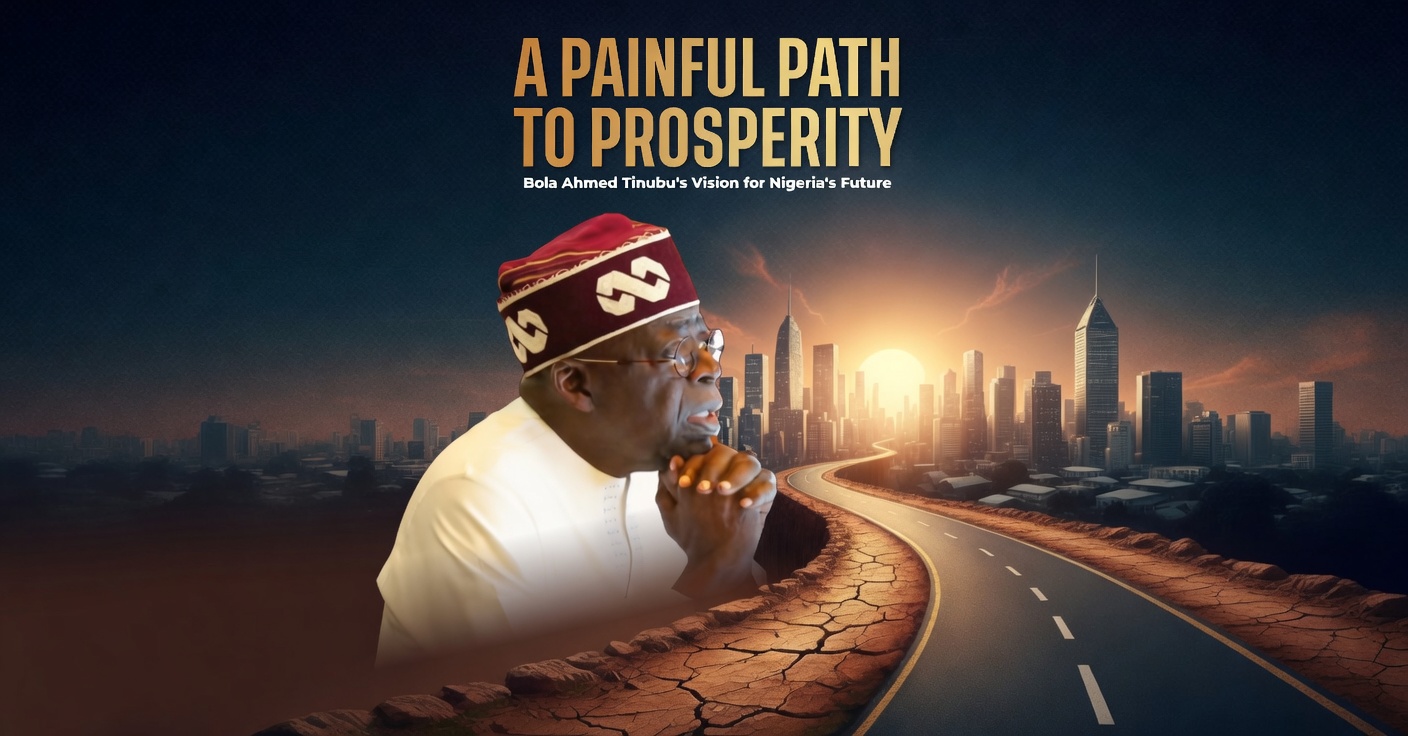
Fiscal discipline today is the foundation for an industrialized, self-reliant, and prosperous Nigeria tomorrow. The path is painful, but the destination is clear — and worth the journey.
–
The Path Forward
The “A Painful Path to Prosperity” initiative aims to build strategic partnerships for widespread dissemination of this narrative — domestically to restore public buy-in, and internationally to attract the investment and goodwill Nigeria needs to succeed.