


















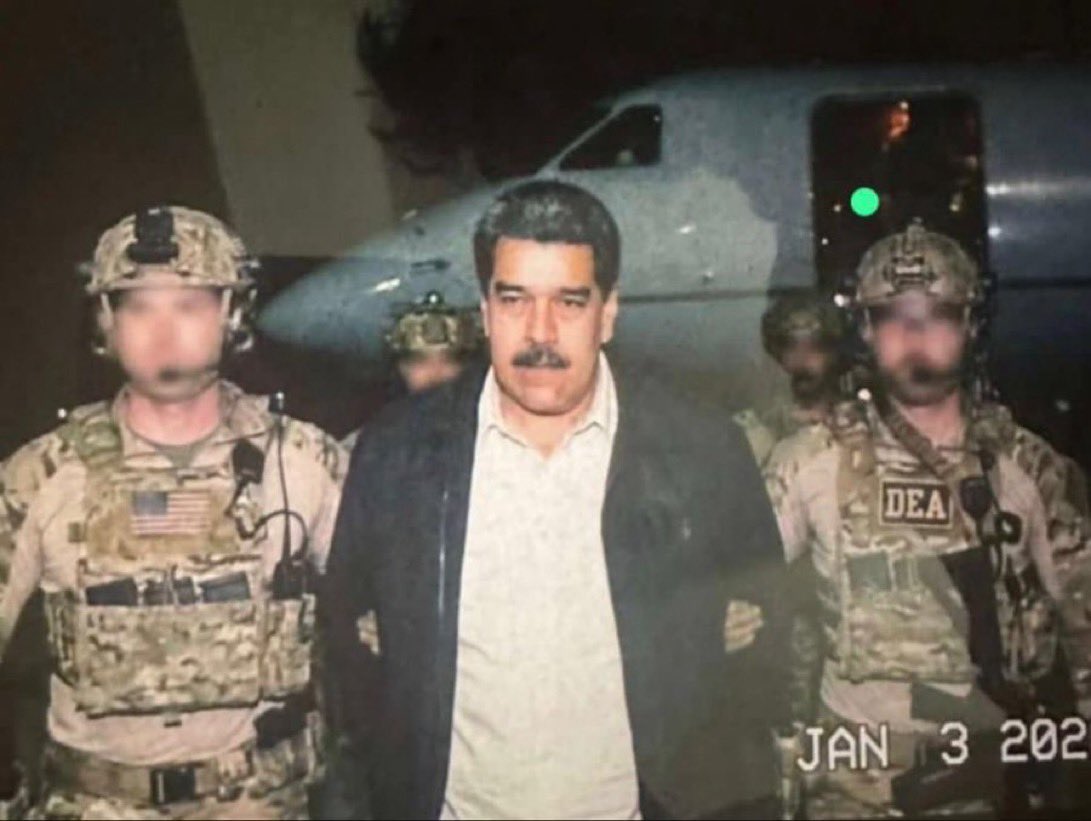
While the world watched the plumes of smoke rising from Fuerte Tiuna on Twitter now X feeds, a far more quiet and clinical drama was unfolding in the literal “dead space” of the Caribbean. This is the story of the capture not as a political victory, but as a logistical miracle—and a terrifying precedent for 21st-century warfare.
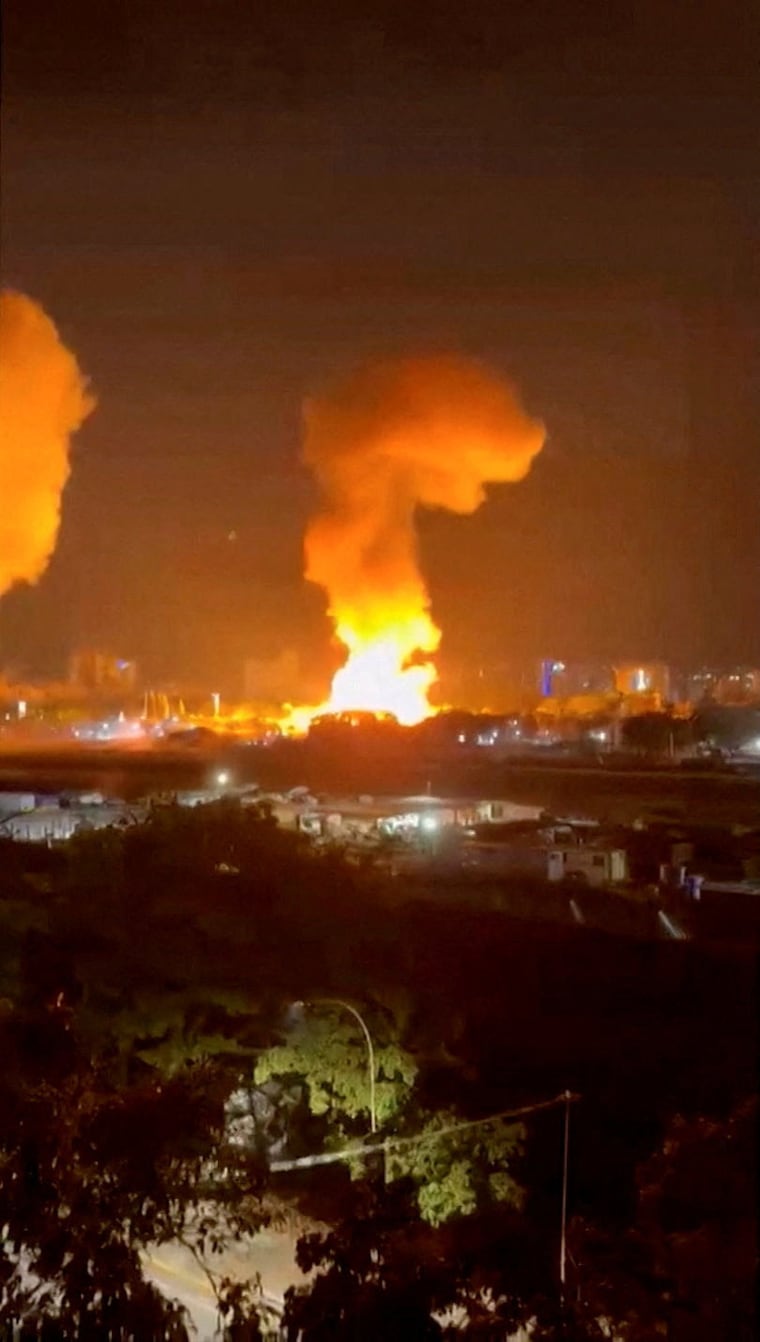 02:05 AM – The “Acoustic Shadow”
In the minutes leading up to the strikes, residents of the Chacao district reported a strange, oppressive silence. This wasn’t a coincidence. Unreported until now, the U.S. utilized experimental wide-spectrum electronic warfare suites—colloquially known as “The Bell”—to create a localized “acoustic and electronic shadow” over the presidential residential quarters.
While the FAES (Special Action Forces) outside the gates were checking their radios, which had gone silent, the Delta Force “Heavy” teams were already breaching the rear perimeter using low-light, high-speed MAG-lev transport drones. They didn’t come in with a loud “shock and awe” entry; they came in like a surgical incision.
 The “Negotiated” Resistance?
The media is reporting a “firefight,” but sources close to the ground suggest something more unsettling. Inside the bunker, the “Red Circle”—Maduro’s innermost guard—faced a choice. We have learned that in the 72 hours leading up to the raid, encrypted “Bounty Notifications” were sent directly to the personal devices of Maduro’s personal security detail.
The $50 million bounty wasn’t just a poster; it was a digital countdown. When the doors to the private quarters were breached, the resistance wasn’t a wall of lead—it was a series of tactical surrenders. The story the media hasn’t told yet is how many of Maduro’s “most loyal” soldiers simply stepped aside, having already verified their offshore accounts.
 04:21 AM – The “Vertical Extraction”
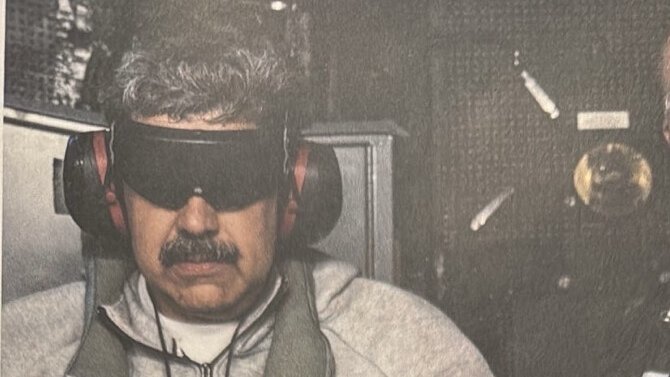
The image of Maduro on the USS Iwo Jima has gone viral, but the how is the true story. He wasn’t driven out in a convoy. He was “plucked.”
In a maneuver rarely seen outside of high-budget cinema, the extraction team used a “High-Tension Vertical Recovery” (HTVR) system. Maduro and Cilia Flores were secured in a pressurized tactical pod and winched directly into a hovering stealth transport that never touched the ground. This kept the footprint of the “invasion” to a single city block, avoiding a wider urban war that many feared.were used as “passive relays” to guide the U.S. stealth craft, making them silent partners in the capture.
 The Stakeholder Perspective: The Hidden Realities
 * The Venezuelan Military: The Bypass Strategy
The media is looking for signs of a “defeated” army, but the reality is more clinical. The military wasn’t defeated in battle; they were systematically bypassed. High-ranking generals are currently in a self-imposed “communication blackout”—not because their infrastructure is destroyed, but because they are waiting for a clear signal on who will honor their existing contracts and pensions. The “loyalty” of the officer corps is currently a fluid commodity.
* Global Energy Markets: The Data Heist
While the 12% spike in crude oil prices dominated the morning tickers, the real story is digital. During the chaos of the raid, specialized cyber-teams reportedly mirrored and then wiped the core servers of PDVSA (the state oil company). The primary concern for stakeholders isn’t the flow of oil today, but the fact that the U.S. now holds the “ledger” of every back-channel energy deal made over the last decade.
* Regional Neighbors: Silent Partners
Publicly, Bogotá and Brasília are calling for “restraint” and “democratic transition.” However, intelligence leaks suggest a deeper involvement. It appears the radar arrays in Colombia and Northern Brazil were used as passive relays to guide the U.S. stealth craft into Venezuelan airspace. This makes the capture a regional collaborative effort disguised as a unilateral American strike.
* The Global Financial System: The Freeze
Beyond the physical capture, a “financial net” was dropped simultaneously. Within seconds of Maduro being secured, over 400 offshore accounts linked to his administration were frozen globally. This wasn’t a slow legal process; it was a pre-coordinated strike with international banks that effectively “bankrupted” the regime in the same hour it lost its leader.
 What happens next?
The narrative will soon shift to the Southern District of New York and the high-profile narco-terrorism charges. But for the people of Caracas, the question isn’t about the trial—it’s about the power vacuum left behind.