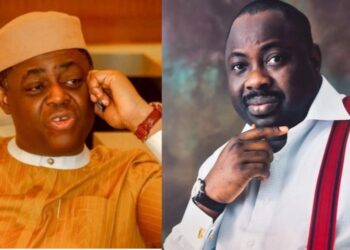

















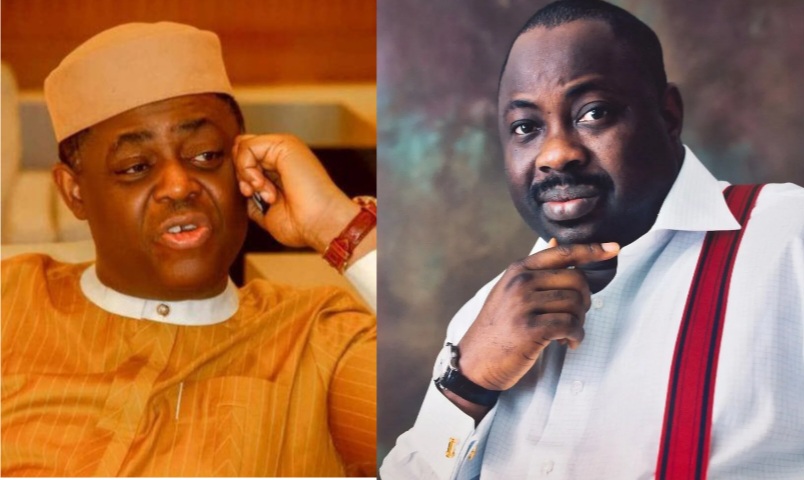
The recent appointment of Chief Femi Fani-Kayode (FFK) as Nigeria’s Ambassador to Germany has sparked more than just diplomatic curiosity; it has ignited a firestorm of commentary regarding the intersection of loyalty, pedigree, and political survival. In a scathing and deeply personal critique, veteran journalist and former presidential candidate Dele Momodu has pulled back the curtain on the motivations behind FFK’s recent political maneuvers.
A Legacy Under Scrutiny
Momodu, who knew the late Chief Babaremilekun Adetokunbo Fani-Kayode, Q.C., SAN, long before encountering his son, describes the younger Fani-Kayode as a “classic case of wasted investment.” Despite a fourth-generation Cambridge education and a storied family name, Momodu paints a picture of a man whose temperament is fundamentally at odds with the “comity of sane human beings.”

The critique comes at a sensitive time, just as President Bola Tinubu moves to “unleash” Fani-Kayode on the Federal Republic of Germany—a move Momodu suggests is more an act of “mercy and compassion” from the President than a meritocratic assignment.

The “Plan B” Revelation
Perhaps most damaging in Momodu’s report is the disclosure of FFK’s lack of ideological rootedness. According to Momodu, the new Ambassador-designate was far from confident in his standing within the Tinubu camp.
“For Femi, it is a fulfillment of a long-expected appointment. We discussed it several times… He was already working on Plan B, and begging a few of us to help him reach out to Alhaji Atiku Abubakar (GCON), if all hopes evaporate.”
This revelation suggests that while FFK was publicly performing loyalty to the current administration, he was privately hedging his bets, prepared to pivot back to the opposition led by Atiku Abubakar had the ambassadorial posting not materialized.

Analysis: Power as Oxygen
The report underscores a recurring theme in Nigerian power dynamics: the desperation for relevance. Momodu’s assessment is blunt—Femi Fani-Kayode without power is “like a fish out of water.”

As Stakeholders Magazine continues to track the “Planet, People, and Profits” impact of Nigeria’s global representation, the question remains: Can a man described by his peers as “querulous, garrulous, and cantankerous” effectively represent the nation’s interests in Europe’s largest economy? Or is this appointment merely a strategy to keep a volatile political “enfant terrible” occupied far from the domestic stage?

EDITOR’S NOTE: This report incorporates excerpts from recent commentary by Aare Basorun Akinrogun Dele Momodu. Stakeholders Magazine remains committed to providing a platform for diverse perspectives on leadership and national governance.