























In a resurfaced clip that’s sparking renewed debate on tax policy, Elon Musk, CEO of Tesla and SpaceX, declared himself the largest individual taxpayer in history, having shelled out over $10 billion in a single year.
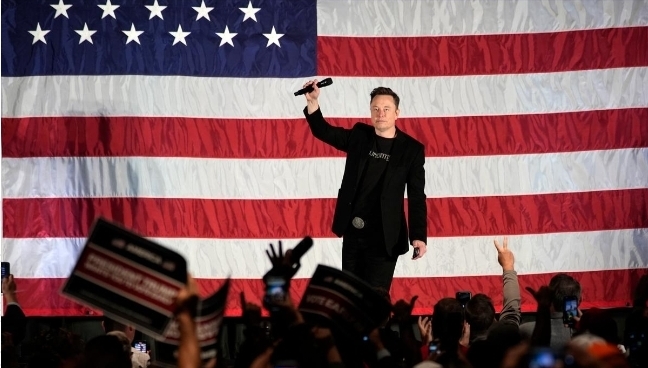
 Elon Musk, standing before a massive American flag at a 2024 campaign event in the Philadelphia suburbs, humorously lamented the lack of recognition from the IRS for his record-breaking tax payment.
“I’m the largest individual taxpayer in history. I’ve paid over $10B in tax. I thought the IRS might send me a little trophy or something,”
Musk quipped during the speech, suggesting even a cheap plastic award from a kids’ karate competition would suffice.He added that he received nothing—not even a cookie—but affirmed he was “happy to pay the taxes.”
The statement, originally made at a solo event supporting then-President-elect Donald Trump, has gone viral again on X (formerly Twitter) amid fresh discussions on Musk’s fiscal contributions. The clip, shared by the account @ThomasSowell on February 18, 2026, highlights Musk’s 2021 tax bill of approximately $11 billion, triggered by exercising Tesla stock options worth over $23 billion. This remains the single largest individual tax payment in U.S. history, surpassing any previous records.

In the full speech, Musk transitioned from his tax anecdote to broader economic insights, describing the stock market as a “wild rollercoaster” and quoting Warren Buffett: owning a publicly traded company is like having someone yell house prices at you all day— the fundamentals don’t change overnight.
He concluded with a call to action:
“We should simplify the tax code, get rid of a lot of exceptions and loopholes, and make it easy to understand.”
This push for reform resonates with stakeholders in the business world, where complex tax structures often favor loopholes for the ultra-wealthy while burdening corporations and investors. Musk’s comments come as he recently projected his lifetime tax payments could exceed $500 billion, including estate taxes upon death. For investors, this underscores the volatility of stock-based compensation and the tax implications of unrealized gains, a hot topic in ongoing policy debates.

Reactions on X have been mixed, with supporters praising Musk’s contributions—”Dude definitely deserves a trophy,” one user commented—while critics question the proportionality, noting that $10 billion represents just 1.18% of his estimated $844 billion net worth. Others highlighted systemic issues, like government spending on “illegal aliens” or endless pork-barrel projects.
 As Musk continues to influence tech, space, and now political spheres, his tax narrative serves as a reminder for stakeholders: simplifying the code could level the playing field, reducing administrative burdens and fostering innovation.
Whether the IRS ever sends that trophy remains to be seen, but Musk’s billions are already reshaping the conversation on fair taxation.