













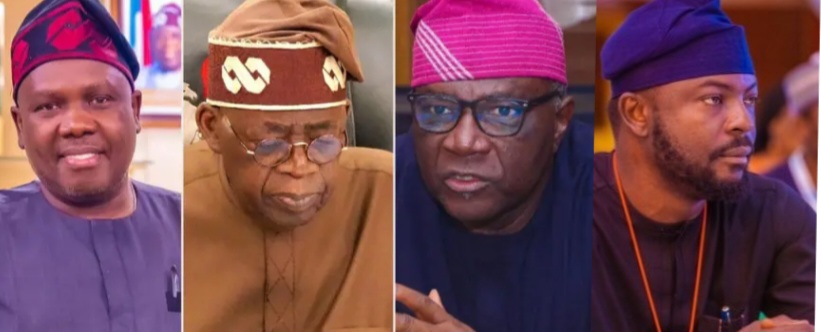
President Bola Ahmed Tinubu’s administration came into office promising painful but necessary reforms — fuel subsidy removal, naira float, tax reforms, and infrastructure push — that would eventually lead Nigeria from current economic distress to lasting prosperity. Yet, instead of relentlessly explaining, sensitising, and selling these reforms to a suffering populace, key media aides Olusegun Dada, Daniel Bwala and Bayo Onanuga have often turned themselves into professional defenders of individuals and attack dogs against opposition figures. The result? Government institutions appear dragged into unnecessary disputes, the reforms remain poorly understood, and the road from pain to prosperity feels longer and lonelier than it should.Here are glaring examples of how parts of Tinubu’s communication team are missing the bigger picture:

Olusegun Dada amplifies personal defence of INEC Chairman Professor Joash Ojo Amupitan instead of leaving it to INEC’s own spokesperson
When a recent social media controversy erupted over claims that the current INEC Chairman, Professor Joash Ojo Amupitan, SAN (sworn in October 2025), had endorsed a partisan post on X, the proper channel was for INEC’s Chief Press Secretary/Media Adviser, Adedayo Oketola, to issue a statement. Presidential aide Olusegun Dada (@DOlusegun on X) not only shared the full INEC press statement denying that the Chairman has any personal X account or engages in partisan activity, but also added his own commentary: “Those wailing under this post are doing so because they hate that the lie they and their fanatical supporters concocted against the INEC chairman is being dispelled. INEC is an institution of the Federal Government. Amplifying their press statement which is correcting misinformation is not same as defending anyone.” While Dada framed it as institutional support, the optics show a presidential aide stepping in to vigorously defend the INEC Chairman directly. This blurs the line between the Presidency and an supposedly independent electoral body. The real task — explaining how credible elections and electoral reforms fit into Tinubu’s broader governance and economic agenda — gets sidelined.

Daniel Bwala’s frequent sharp jabs at Peter Obi rather than focusing on Tinubu’s reforms
Special Adviser on Media and Policy Communication, Daniel Bwala, has repeatedly made strong personal criticisms of Peter Obi, the 2023 Labour Party presidential candidate. His interventions often include statements like “Peter Obi will never be president,” descriptions of Obi as a “failed politician,” or claims questioning Obi’s understanding of democracy, grassroots support, and loyalty. These sharp, personalised attacks on Peter Obi dominate many of his public appearances, interviews, and social media interventions, rather than consistent, empathetic explanations of the government’s reforms. Nigerians facing higher transport fares, food prices, and electricity tariffs are not primarily seeking another round of opposition-bashing. They want clear communication on why the current pain is necessary and concrete timelines or milestones for when the promised prosperity will materialise. The heavy focus on Peter Obi leaves that vital sensitisation work underdeveloped.
Bayo Onanuga defending Bala Nafiu, an ADC member
Special Adviser Bayo Onanuga, responsible for strategic information management, has been seen vigorously defending Bala Nafiu, a figure associated with the opposition African Democratic Congress (ADC). Regardless of the specific context (policy or otherwise), the optics are poor for a senior presidential aide.Why expend significant energy shielding an opposition-linked individual when the same effort could educate citizens on how Tinubu’s reforms are repositioning Nigeria for long-term growth in agriculture, power, infrastructure, and economic stability? The public is left questioning priorities: are the President’s men more focused on selective political interventions than on the hard, consistent work of public enlightenment?The pattern is concerning. Aides like Olusegun Dada, Daniel Bwala and Bayo Onanuga sometimes mistake media combat and individual defence for strategic communication.

Personalised interventions, opposition-focused attacks, and selective shielding risk undermining public trust in institutions and leaving the core reforms undersold.If these aides truly want to serve the President and the nation, a sharp refocus is needed: minimise personalised defences and opposition-bashing, and prioritise relentless, clear, empathetic sensitisation about the reforms. Explain in simple, consistent language how today’s sacrifices — though painful — are building a stronger economy with more jobs, stable power, improved food security, and sustainable growth tomorrow.

The reforms have potential. The messaging, in several high-profile cases involving Olusegun Dada, Daniel Bwala and Bayo Onanuga, is currently failing to carry the public along effectively. Time for the team to realign before the opportunity to build understanding and support is further eroded. Nigerians deserve communication that bridges the pain of today with the prosperity of tomorrow.