















ABOOTTABAD, PAKISTAN. MAY 2, 2011.
The night air was heavy, the streets quiet. Behind the high walls of a nondescript compound in a garrison town, the world’s most wanted man, Osama bin Laden, was living in what he believed was absolute secrecy. He was arguably the most hunted individual in human history, yet he resided less than a mile from the Pakistan Military Academy. For months, the United States had watched. They monitored the trash, the courier traffic, the heat signatures. They built a replica of the compound halfway across the world to rehearse every footstep. And when the operation finally commenced, it was not a thunderous invasion of tanks or a spectacle of carpet bombing. It was a phantom insertion. By the time the Pakistani military scrambled their jets to investigate the disturbance, the U.S. Navy SEALs were already wheels-up, the target neutralized, and the intelligence secured. That operation defined a new century of warfare. It demonstrated that sovereignty in the modern age is not defined by borders, but by information. It showed that real power is not about how loud you can scream, but how silently you can strike. Fast-forward to the present day. The theatre has changed, but the doctrine remains the same. Yesterday, on Nigerian soil, a similar silent precision unfolded. The United States identified terrorist camps, executed a targeted neutralization, and withdrew. No press conferences. No political grandstanding. No collateral damage. This recent event is not just a military footnote; it is a seismic shift in how we must understand the security architecture of Nigeria. It forces us to confront a hard truth: We have entered the era of surgical strikes, and the age of “noise” is over.
 The Decisive Window: December’s Historical Echoes
To understand the present, one must always consult the past. History is not merely a record of events; it is a map of human behavior and strategic patterns. If one looks closely at the timeline of American military dominance, a peculiar pattern emerges around the dates of December 24th to December 26th. It is a window of high-impact, low-expectation operations—a time when the world exhales, and vigilance drops. The precedent was set at the very genesis of the American nation. On December 25, 1776, the Continental Army was ragged, demoralized, and on the brink of collapse. The British and their Hessian mercenaries were comfortable, wintered in Trenton, expecting a quiet holiday. George Washington did the unthinkable. In the dead of a freezing night, he led his troops across the icy Delaware River. It was a logistical nightmare and a tactical gamble. But it worked. The surprise attack that followed the next morning didn’t just win a battle; it saved the revolution and altered the trajectory of human history.
That DNA—the willingness to strike when the enemy is comfortable, the ability to operationalize the element of surprise—remains embedded in the U.S. military ethos. History always leaves clues for those willing to look. The recent operation in Nigeria fits this lineage perfectly. While the populace was immersed in the festivities of the season, while the political class was exchanging pleasantries, the machinery of high-level intelligence was turning. The terrorists, likely lulled into a false sense of security by the holidays and the perceived “sluggishness” of local enforcement, found themselves in the crosshairs of a force that does not take a holiday.
 The End of Propaganda
For decades, the security narrative in Africa, and specifically Nigeria, has been plagued by what military strategists call “kinetic noise.” We are used to seeing convoys of trucks, hearing loud proclamations from spokespersons, and reading vague press releases about “repelling attacks.”
This approach—heavy on visibility but often light on strategic termination—has bred a cynical populace. Nigerians have become accustomed to the “fog of war” being used as a cover for inefficiency.
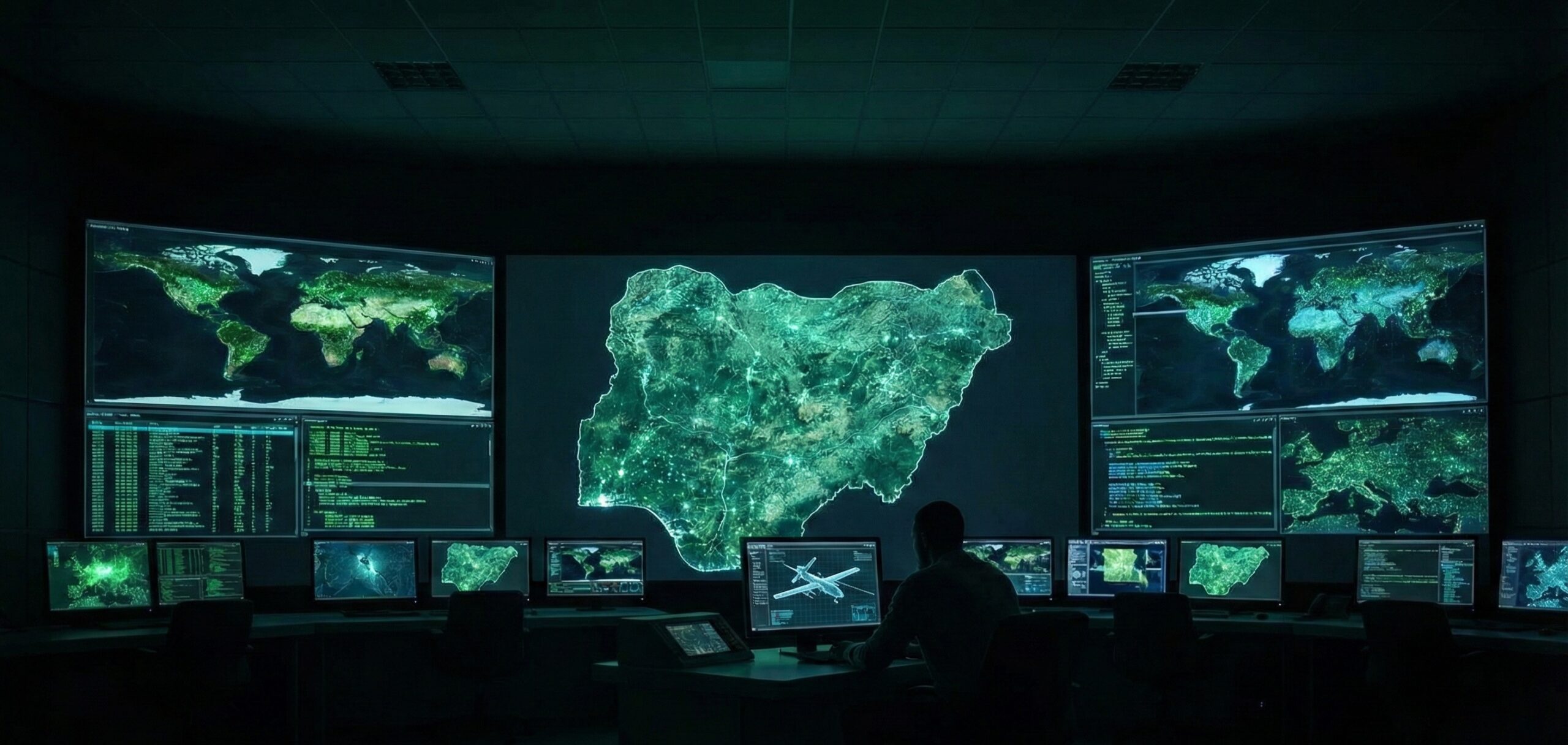
However, the intervention of global intelligence powers changes this calculus entirely. As the recent strike demonstrates, propaganda has no effect on a satellite that can read a license plate from space. Rhetoric cannot hide heat signatures.
The harsh reality stakeholders must accept is that foreign intelligence agencies, particularly the United States, likely possess a more granular, data-driven understanding of Nigeria’s terrain than the Nigerian state apparatus itself. They map the metadata, they track the financial flows, and they monitor the encrypted communications. When the U.S. decides to act, they do not need to negotiate with local sentiments or navigate the muddy waters of internal politics. They act on raw, verified data. This is the difference between “security” as a political talking point and “security” as an operational reality.
 The Musa Factor: A New Mandate
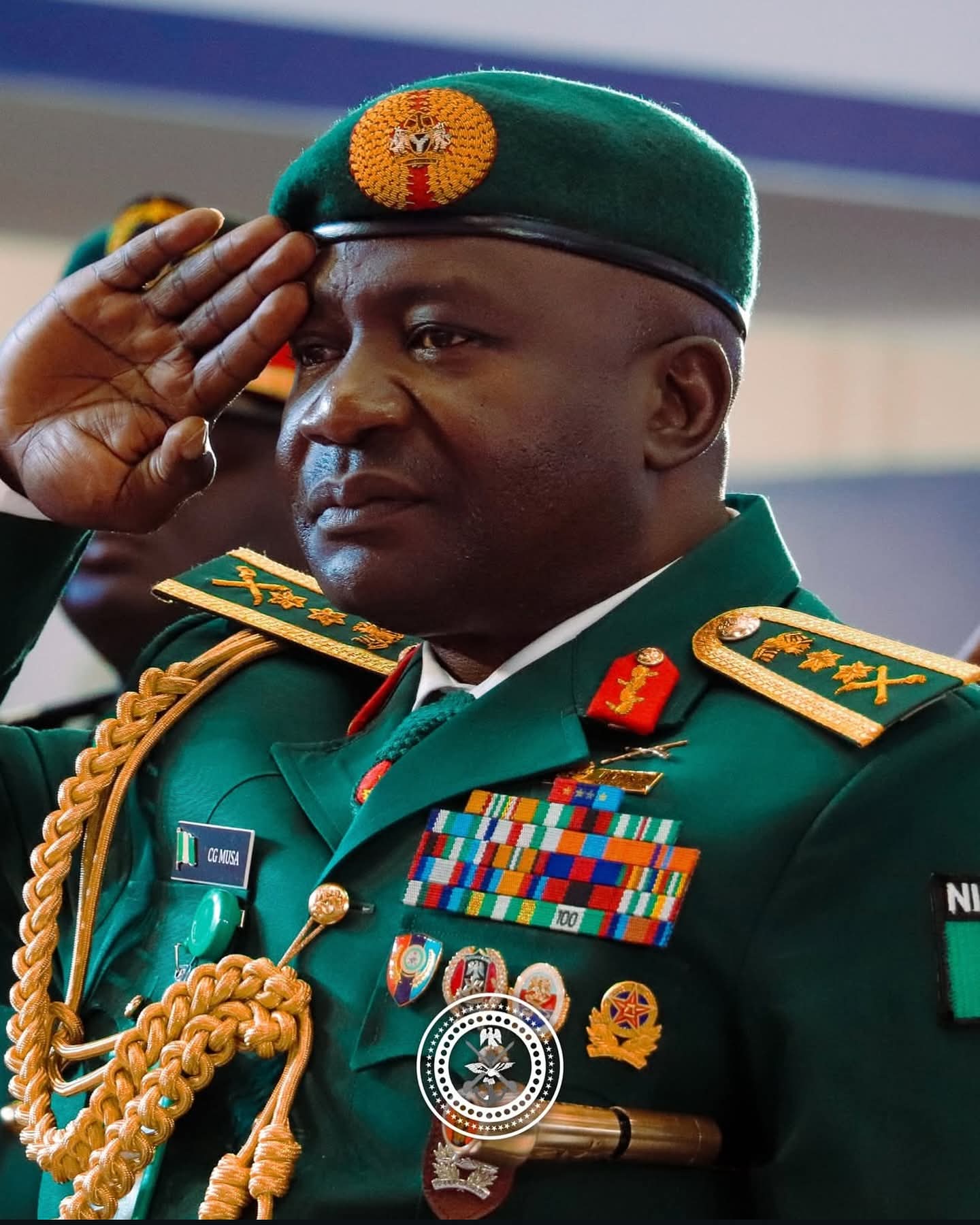
In the midst of this evolving landscape stands General Christopher Musa.
Stakeholders and observers must ask themselves a critical question: Why is General Musa the man at the helm at this precise moment in Nigeria’s history? In the military, as in high-stakes corporate governance, personnel is policy. General Musa’s tenure coincides with a pivotal realization within the Nigerian defense architecture—that the old ways are dying. The era of sentimental security is over. The days of managing insecurity as a business are being forcibly closed by the necessity of national survival and international pressure. Security is no longer about ethnic balancing or political favors. It is about intelligence, coordination, and precision. General Musa represents a bridge to this new reality. His leadership is being tested not by his ability to hold press conferences, but by his ability to synchronize Nigeria’s local capabilities with this global standard of intelligence supremacy. The silence of the recent days is not a silence of inactivity; it is the silence of professionalism. It suggests a military hierarchy that is finally learning to talk less and do more.
 The Economic Imperative for Stakeholders
Why should the business community, the readers of Stakeholders Magazine, care about a drone strike or a raid in the forest? Because capital is a coward. Money flees from noise and uncertainty. The “risk premium” attached to doing business in Nigeria is directly correlated to the perceived incompetence of the security apparatus. When security becomes surgical, predictably ruthless against disruptors, and intelligence-driven, the risk premium drops.
* Foreign Direct Investment (FDI): Investors do not care about the politics of a nation; they care about the safety of their assets. A Nigeria where terrorists are neutralized with precision is a Nigeria that is open for business.
* Agricultural Supply Chains: The insecurity in the north has decimated the food supply chain, driving inflation. Surgical security restores the farm-to-market corridors.
* National Brand: Moving from a nation associated with kidnapping to a nation associated with sophisticated counter-terrorism sends a signal to the global community.
 The Future is Precise
The recent events are a wake-up call. The United States has shown us what is possible. They have demonstrated that with the right intelligence, the enemy has nowhere to hide—not in a compound in Abbottabad, and not in a forest in Nigeria. The carpet bombing of the past is obsolete. We are now in a world of snipers and algorithms. For Nigeria, the path forward is clear. We must shed the excuses. We must stop relying on propaganda to soothe the public and start relying on intelligence to protect them. We must support leadership that understands the difference between activity and productivity.
General Musa and the current defense establishment have a window of opportunity—a “Delaware Crossing” moment of their own. If they can pivot Nigeria’s military doctrine toward this silent, lethal efficiency, the narrative of the nation will change. Propaganda will not save us. Sentiments will not protect us. Only cold, hard intelligence and the will to act on it will suffice. The strike has happened. The noise has stopped. If we follow this path, Nigeria will be safe again.