



















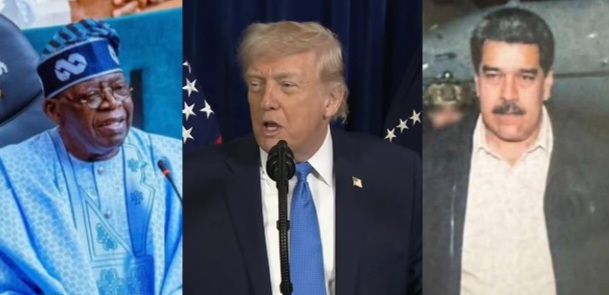
The global geopolitical landscape shifted on its axis last week. In a brazen and unprecedented display of unilateralism, the United States executed a kinetic intervention in Venezuela, breaching sovereign borders to take President Maduro and his wife into custody. As the dust settles in Caracas, the American administration has signaled its intent to remain until a “reasonable structure” is established. While the international community—led by the BRICS nations—offers tepid condemnations, the reality is clear: under the current U.S. administration, the doctrine of sovereignty is being rewritten in real-time. For Nigeria, this is not merely a distant headline; it is a red flag waving over our own internal affairs.
 The Sokoto Incursion: A Foreshadowing?
The recent American strikes in Sokoto were a warning shot. While the Nigerian government scrambled to frame the event as a collaborative intelligence effort, the optics told a different story—one of a domestic leadership hearing about kinetic action on its own soil via the news. The justification for the Venezuela invasion was not just oil; it was the total erosion of democratic legitimacy. Maduro had stifled dissent, compromised institutions, and left his citizenry so destitute that they cheered the breach of their own sovereignty in hopes of relief. We must ask ourselves: Are we cultivating the same conditions here?
 The Erosion of Pluralism
Stakeholders must look closely at the current trajectory of the Nigerian state. We are witnessing a systematic transition toward a monolithic political structure:
* Political Migration: Approximately 26 Governors have decamped to the ruling APC, often under opaque conditions of state pressure.
* Institutional Capture: The traditional “checks and balances” are fraying. The National Assembly appears increasingly as an appendage of the Executive, and the Judiciary’s independence is being questioned in the court of public opinion.
* Economic Disconnect: While core indices like GDP growth and decelerating inflation look good on a spreadsheet, the “common man” index is in freefall. Poverty is deepening, and the government’s response—increased taxation and levies without a corresponding reduction in the cost of governance—is fueling a sense of national despondency.
 The ‘Venezuelan Boat’ vs. The 2027 Opportunity
The Venezuelan crisis was born out of a “feeling of no choice.” When a populace feels they have no constitutional path to change, it creates a vacuum that foreign powers—acting under the guise of altruism or “protecting religious interests”—are often too happy to fill.
Unlike Venezuela, Nigeria still holds a strategic card: 2027. The upcoming election cycle is not just a domestic event; it is a demonstration of sovereign viability.
Strategic Imperatives for the Nigerian State:
* Restore Pluralism: We must abandon the “one mandate” narrative and allow competing political ideologies to breathe. A one-party state is a fragile state.
* Institutional Independence: The Judiciary and law enforcement must function as credible, independent umpires rather than instruments of the ruling class.
* Economic Empathy: Fiscal policy must prioritize the relief of the citizenry over the expansion of the state’s tax net.
The Bottom Line
In the Trump era, the world is led by a “Global Police” force that is increasingly prone to unilateral action. If Nigeria continues to run elections that force aggrieved parties into compromised courts, and if we continue to ignore the thinning line between governance and cronyism, we risk the “Venezuelan Treatment.” We can continue to celebrate tactical “strategies” in Abuja, but if those strategies lead to institutional collapse, the final outcome may be a visit to New York to see our leadership—not at the UN, but in custody. The coffee is brewing. It is time for the Nigerian elite to wake up and smell it.