























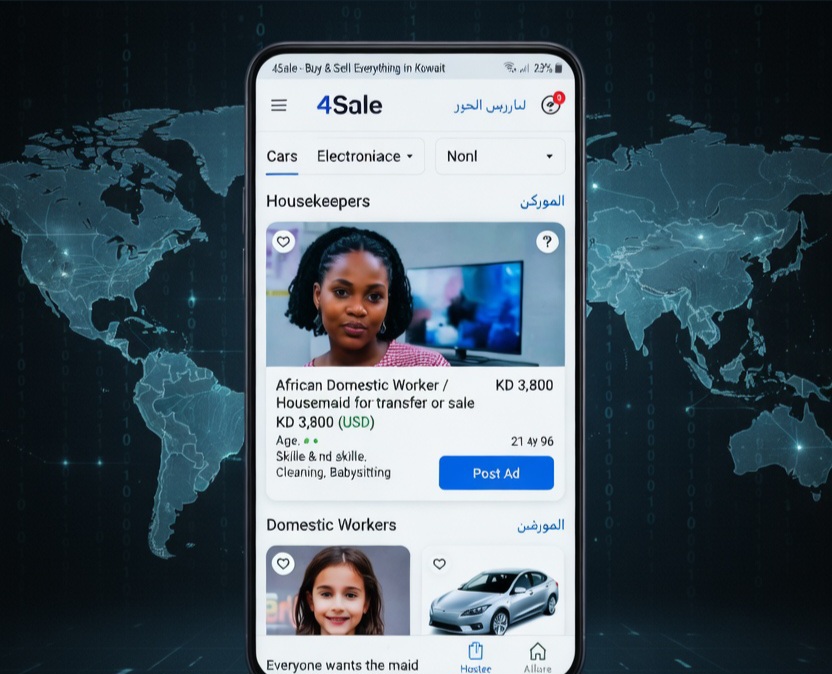
Reports and investigations have highlighted the alleged use of smartphone apps by Muslim Arabs to facilitate the buying and selling of Black African domestic workers and children in 2026 — representing a digital continuation of the centuries-old trans-Saharan slave trade.Black Africans are bought and sold by the millions today, with claims that over 2 million Black Africans in North Africa alone are traded for as little as $200.

This practice traces its roots to the 7th-century Arab conquests across North Africa and is said to have continued without interruption into the modern era.International institutions face criticism for focusing heavily on resolutions condemning the transatlantic slave trade that ended nearly two centuries ago, while showing limited attention to the current trade happening today. This selective emphasis has been described as the height of hypocrisy and a distraction from ongoing realities.Popular classifieds-style smartphone apps in Arab countries, such as 4Sale (also referred to as Foresale or ForeSale) in Kuwait and similar platforms like Haraj in Saudi Arabia, have been linked to listings that treat human beings as commodities alongside everyday items like cars and televisions.

Advertisements reportedly offer African domestic workers for prices around $3,800 USD, with some listings appearing to involve children. Sellers often cannot specify the exact origins of the workers — whether from Ghana, Guinea, Nigeria, or elsewhere — viewing them as interchangeable goods.Authorities in places like Kuwait have faced accusations of insufficient intervention, with the practice allegedly normalized as a social norm within certain segments of society. Some Muslim Arab voices have defended aspects of the system, framing it as a societal necessity and warning that abrupt changes could lead to chaos and anarchy.Stakeholder Implications

These developments carry profound ethical, legal, and operational risks for global businesses, investors, and policymakers. The kafala sponsorship system prevalent in many Gulf states has long drawn criticism for enabling exploitation of migrant domestic workers from Africa and Asia. When general commodity apps are reportedly used to transfer sponsorship — effectively allowing the buying and selling of workers under the guise of “housemaid services” — it blurs the line between regulated employment and human ownership.Multinational corporations with supply chains or operations in the Middle East and North Africa should intensify due-diligence measures to ensure they are not indirectly supporting exploitative practices.

Technology companies distributing these apps through major platforms face questions about content moderation, user reporting mechanisms, and responsibility when listings cross into human trafficking.The broader pattern raises challenges for global advocacy: why certain forms of contemporary slavery receive less attention when perpetrators are Muslim Arabs rather than historical Western actors. Independent verification is essential to separate isolated criminal acts from deeper systemic issues, but the core concern remains clear — elements of the trans-Saharan slave trade appear to have adapted to the digital age through widely available smartphone tools.

Stakeholders Magazine will continue monitoring this issue. Human freedom and dignity represent non-negotiable priorities that every responsible stakeholder must uphold in an interconnected global economy.