






















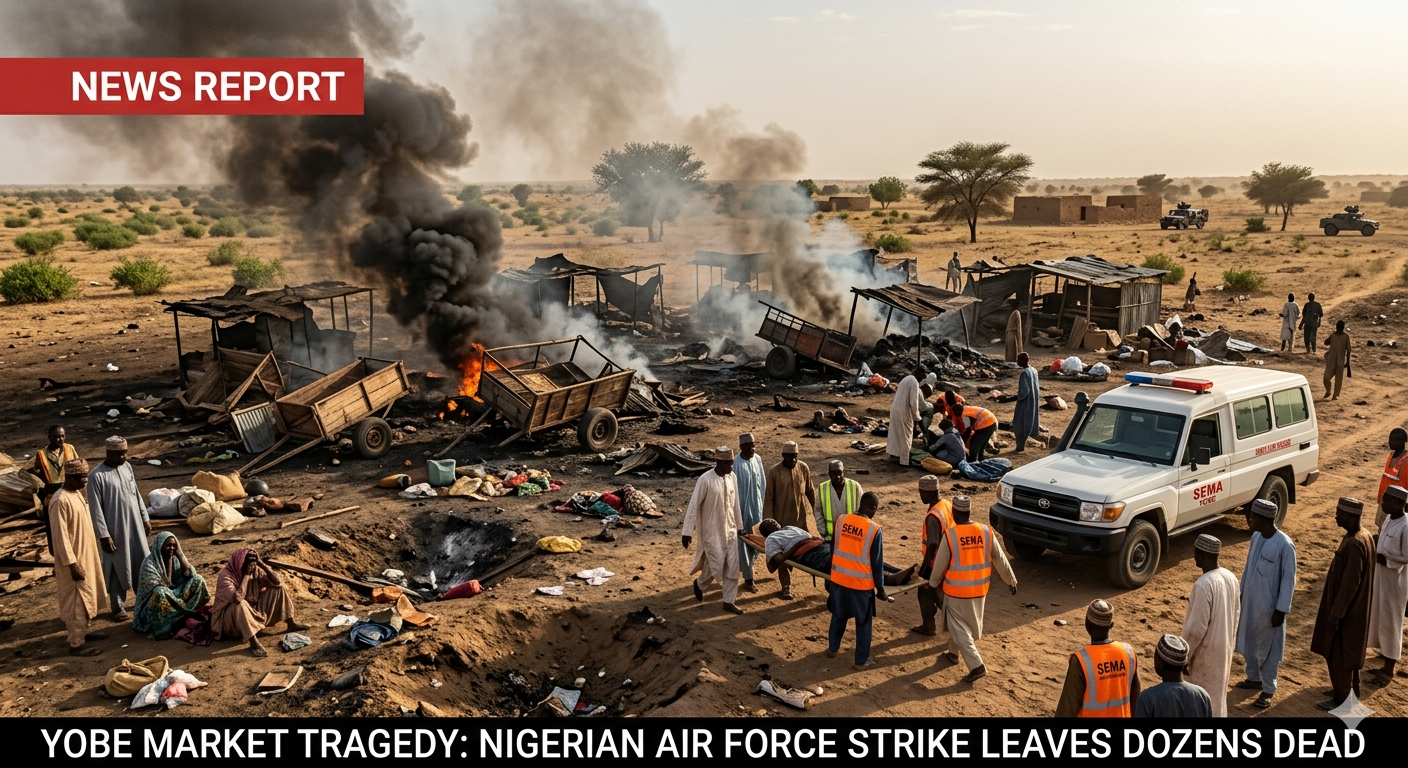
DAMATURU – A Saturday afternoon intended for commerce and community at the Jilli weekly market in Yobe State turned into a scene of carnage following an accidental airstrike by the Nigerian Air Force that has reportedly claimed over 100 lives. The incident occurred during a high-intensity kinetic operation aimed at neutralizing a gathering of Boko Haram insurgents believed to be moving through the volatile corridor connecting Yobe and Borno States. According to witnesses and local emergency responders, the strike hit the heart of the bustling market during peak trading hours, sending shrapnel through stalls and causing a massive fire that destroyed vital local infrastructure.


Survivors were rushed to the Geidam General Hospital and other nearby medical facilities, where health workers have been overwhelmed by the sheer volume of trauma cases, ranging from severe blast injuries to critical burns. The Yobe State Emergency Management Agency and the state government have since confirmed the incident, describing it as a tragic misfire in a zone known for insurgent logistics but also for essential civilian economic activity. This disaster marks one of the highest civilian casualty counts from an aerial operation in recent years, prompting an immediate outcry from civil society organizations and human rights groups who are calling for a transparent investigation into the intelligence protocols used to authorize the strike.

Security analysts suggest that the tragedy highlights a persistent and dangerous gap between intelligence gathering and the execution of aerial bombardments in populated rural areas. While the Nigerian military has maintained that its operations are strictly targeted at terror cells, the proximity of civilian hubs like the Jilli market to insurgent transit routes remains a high-risk factor that stakeholders argue has not been sufficiently mitigated. The loss of life is expected to have profound implications for civil-military relations in the Northeast, potentially eroding the fragile trust built with local communities who are essential to the counter-insurgency effort.

In the wake of the strike, the federal government has expressed its condolences to the families of the deceased and the Yobe State government, promising a comprehensive review of the engagement. However, for the stakeholders of the region’s stability, the focus has shifted to the urgent need for a standardized compensation framework for victims of military errors and a more rigorous verification process for aerial targets. As the community begins the grim task of burying its dead, the Jilli incident serves as a stark reminder of the heavy humanitarian price often paid in the ongoing conflict, underscoring the necessity for precision and accountability in the nation’s pursuit of internal security.