

















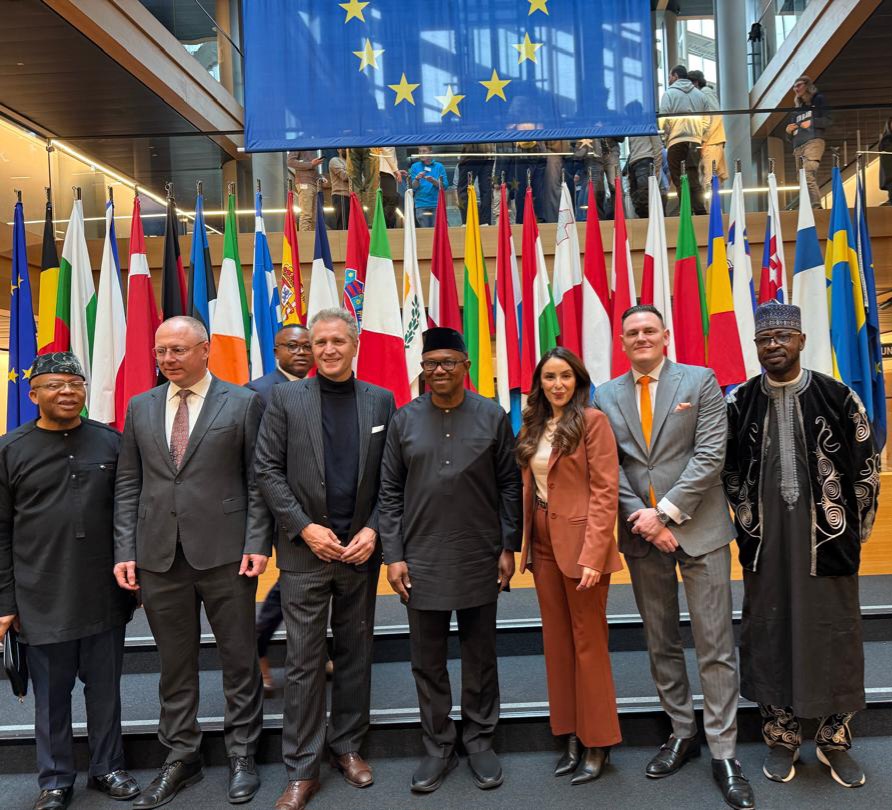

In a rare moment of unfiltered admiration from the European Parliament floor, Nigerian opposition leader and former Anambra State Governor Peter Obi delivered a performance that has left observers across Africa and beyond talking. The video of his address—now going viral on X—captures Obi speaking with poise, precision, and intellectual command before EU lawmakers. Flanked by European officials and backed by the EU flag, he fielded questions with clarity and data-driven insight, earning visible respect from the room.
For many Gen Z Africans and stakeholders weary of recycled political theater, the clip is more than a highlight reel. It is a stark reminder of what leadership could look like on the continent.

Obi opened by expressing gratitude for the platform and framed his presence as the start of a genuine conversation. He did not mince words: Africa’s greatest challenge is not resources, talent, or geography—it is leadership. He argued that the continent possesses everything needed for transformative growth, yet persistent governance deficits have held it back. Nigeria, as Africa’s largest economy and most populous nation, holds the key. A stable, prosperous Nigeria, he stressed, would lift the entire region while delivering mutual benefits to Europe—the continent’s closest neighbor and natural partner.

Crucially, Obi called for a shift in EU-Africa relations: away from aid dependency and toward genuine partnerships focused on good governance, youth empowerment, institutional strengthening, and economic opportunity. “Stop giving us aid,” he effectively urged. “Help us build the leadership and systems that make aid unnecessary.” He painted Africa as “the last frontier of global development,” rich in potential but starved of the visionary stewardship required to unlock it. Europe, he noted, stands to gain enormously from a thriving Africa—through trade, stability, and shared prosperity—rather than managing the spillover costs of poverty and migration.

The reaction online has been electric. Supporters hail Obi’s composure, command of facts, and refusal to embarrass the continent with vague rhetoric or evasion. Critics of the current administration in Abuja see the contrast as glaring: here is a leader who thinks on his feet, articulates a clear vision, and commands international respect without notes or theatrics. Even skeptics acknowledge the moment’s power—competence, it seems, is universally recognizable.

For stakeholders—investors, business leaders, diplomats, and everyday citizens—this is not abstract political theater. Competent, transparent leadership directly correlates with reduced country risk, higher foreign direct investment (FDI), predictable policy environments, and stronger institutions. When African leaders demonstrate the ability to engage global partners as equals rather than supplicants, capital flows more freely, markets stabilize, and long-term planning becomes possible. Obi’s performance underscores a simple truth: the world respects results and substance far more than titles or longevity in office.

Africa has watched too many aging strongmen and recycled politicians fumble on the global stage, turning what should be platforms for partnership into sources of second-hand embarrassment. Obi’s appearance offers a different model—one rooted in preparation, integrity, and forward-thinking governance. As Nigeria heads toward future electoral cycles and Africa grapples with debt, youth unemployment, and climate pressures, the bar has been visibly raised.

The question now is whether African stakeholders—domestic and international—will demand this standard across the board. Peter Obi did not just represent Nigeria in Strasbourg; he represented the continent’s untapped potential. If the admiration in that European Parliament chamber is any indication, the world is ready to listen—and invest—when the messenger is credible.

The rest is up to Africa’s leaders and the citizens who hold them accountable. Competent leadership is not a luxury. In today’s interconnected world, it is the prerequisite for respect, relevance, and real progress.