




















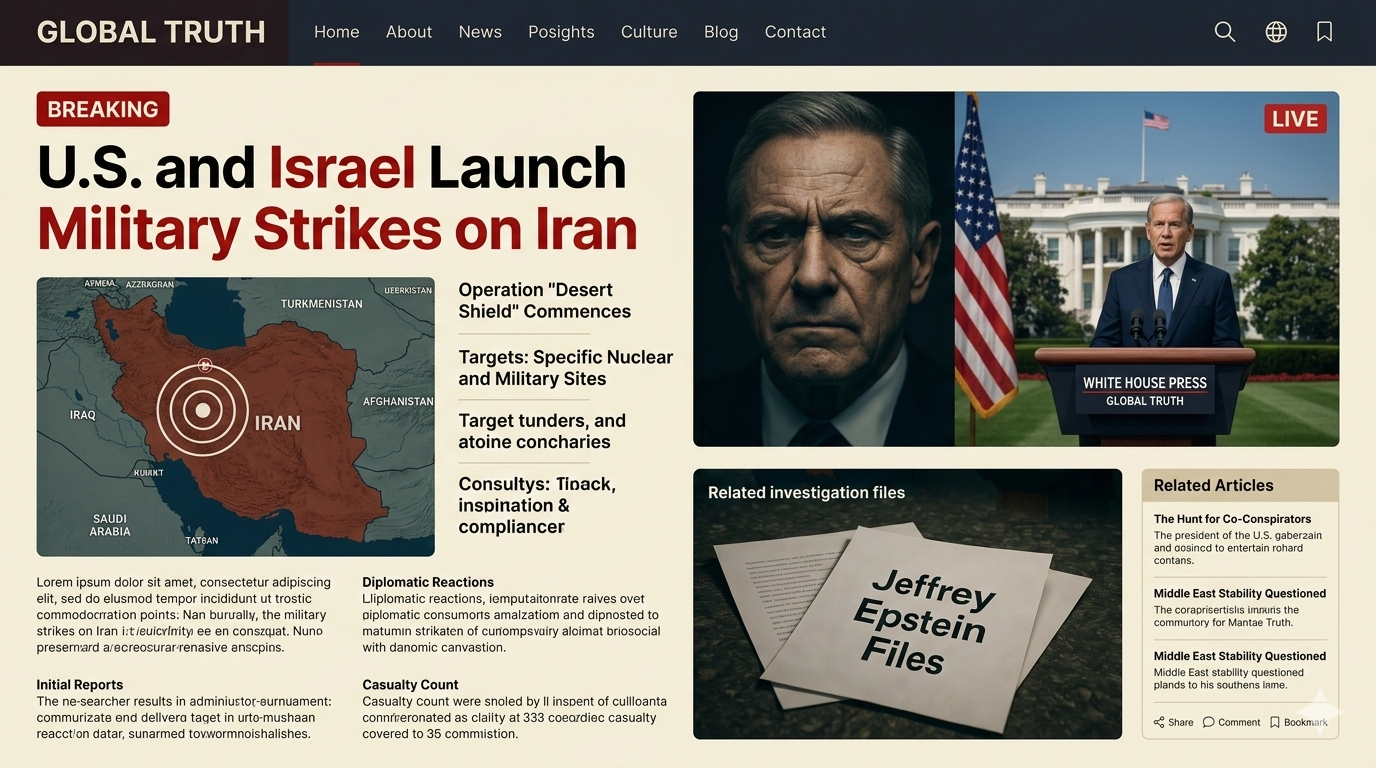
Stakeholders Magazine – March 2026In the high-stakes arena of global geopolitics and domestic accountability, few events have converged with such dramatic timing as the partial unsealing of Jeffrey Epstein’s investigative files and the launch of U.S.-Israeli military strikes against Iran. Dubbed “Operation Epic Fury” by the Trump administration, the February 28, 2026, attacks marked a sharp escalation toward what officials describe as regime change in Tehran. Yet, for many observers—across political spectrums—the thunder of missiles appears to have drowned out a different storm: renewed scrutiny of elite networks exposed in the so-called Epstein files.The Epstein documents, released in waves under the Epstein Files Transparency Act (H.R. 4405), comprise millions of pages of DOJ records, including emails, depositions, and FBI reports tied to the convicted sex offender’s activities.

The latest tranche, made public in late January and early February 2026, triggered immediate fallout: resignations from business leaders, academics, and international figures; investigations abroad; and a wave of public outrage over perceived impunity for the powerful. Among the revelations: references to Epstein’s alleged interactions with high-profile Americans, including unverified claims involving President Donald Trump that briefly surfaced before being retracted or redacted by the DOJ. Documents also highlighted Epstein’s purported ties to Iran, such as a meeting with former President Mahmoud Ahmadinejad during a UN visit, alongside speculation about arms trading or financial networks linked to Tehran. Then came the bombs.On February 28, U.S. and Israeli forces struck Iranian targets, citing nuclear threats, proxy militia support, and regional aggression. The operation reportedly contributed to the death of Supreme Leader Ayatollah Ali Khamenei and drew Iranian retaliation against U.S. assets and allies. President Trump framed the action as essential to American security, vowing to support Iranians seeking regime change.

Critics, however, see a pattern. Republican Rep. Thomas Massie (R-KY) posted bluntly on X: “PSA: Bombing a country on the other side of the globe won’t make the Epstein files go away, any more than the Dow going above 50,000 will.” His statement echoed a broader chorus accusing the administration of engineering a classic diversionary war—using foreign conflict to shift focus from domestic scandals, including the Epstein revelations, Supreme Court rulings against global tariffs, and economic pressures.The Guardian described the strikes as an attempt to “hijack the global narrative and drown out Epstein and tariffs with the thunder of cruise missiles.” Al Jazeera analysts noted a sharp drop in public interest in the Epstein files post-strikes, labeling it part of a “politics of distraction” that individualizes corruption while shielding systemic issues like international impunity and power consolidation.Progressive voices, including Rep. Jamie Raskin (D-MD), condemned the action as unconstitutional, arguing it bypassed Congress and risked American lives amid “shocking disclosures from the Epstein files.” Letters to editors in outlets like the Cincinnati Enquirer and Anchorage Daily News called the war “Trump’s latest diversion from the Epstein files” or a ploy to justify electoral overreach.Social media amplified the theory. Posts on X linked the timing directly, with some users speculating Israeli influence or Mossad connections in the Epstein network as motivators for escalation. One analyst suggested the files themselves served as a pre-war distraction, engineered to build momentum for conflict.

Administration supporters counter that the Iran strikes stem from legitimate security concerns—nuclear ambitions and proxy threats—unrelated to domestic controversies. They point to long-standing U.S. policy shifts, including Trump’s earlier withdrawal from the Iran nuclear deal. Some even argue Epstein-Iran links in the files justify heightened action against Tehran.Yet the synchronization raises stakes for stakeholders in business, finance, and international affairs.

Escalating conflict disrupts oil markets, supply chains, and global trade, potentially fueling inflation already strained by domestic policies. Reputational risks from Epstein associations linger for corporations and executives, even as attention shifts to war coverage.Congressional pushback grows. Bipartisan calls urge reasserting war powers and pursuing diplomacy. Rep. Massie continues advocating for full, unredacted file releases, insisting military action changes nothing about accountability demands.

Whether the Iran war truly diverts from the Epstein saga or merely coincides amid overlapping crises remains debated. What is clear: in an era of instant information and eroded trust, the optics of timing fuel cynicism. For stakeholders navigating uncertainty, the lesson is vigilance—separating geopolitical necessity from political theater could determine resilience in turbulent times.As one observer put it: War may not erase files, but it can bury headlines. The question now is whether accountability will resurface once the smoke clears.