




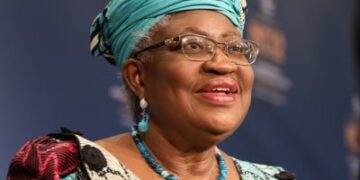












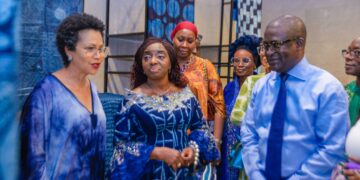






ABUJA, NIGERIA — Key policy drivers, corporate leaders, development agencies, and financial innovators gathered at the Banquet Hall of the State House in Abuja for the landmark Second National Gender Inclusion Conference: #SheIsIncluded 2026. Organised by the Presidential Committee on Economic and Financial Inclusion (PreCEFI) under the Office of the Vice President, the two-day summit centered on the theme “Designing for Delivery: From Financial Inclusion to Economic Transformation for the Nigerian Woman”. The gathering signaled an aggressive transition from high-level advocacy to scalable, operational delivery across the federation.

THE PRESIDENCY’S DIRECTIVE: GROWTH, NOT CHARITY
Delivering the official address on behalf of Vice President Kashim Shettima, Dr. Aliyu Modibbo Umar, Special Adviser to the President on Special Duties (Office of the Vice President), issued a clear declaration regarding the nation’s economic strategy. He emphasized that President Bola Ahmed Tinubu’s goal of expanding Nigeria into a $1 trillion economy will remain impossible if half of the population faces financial exclusion.Speaking for the Vice President, Dr. Modibbo noted that only 47 percent of Nigerian women currently hold formal financial accounts compared to 58 percent of men. He stressed that bridging this gap is an essential national growth strategy rather than an act of welfare or charity. The address highlighted that unlocking affordable capital, market access, and financial identity for millions of female entrepreneurs is the most viable path to expanding economic output, generating sustainable jobs, and driving industrial prosperity nationwide.

INSTITUTIONAL SYNERGY AND STRUCTURAL REMOVAL
Reinforcing the administration’s strategy, Senator Ibrahim Hadejia, Deputy Chief of Staff to the President (Office of the Vice President), declared that the #SheIsIncluded agenda must transcend the status of an annual conference. He urged stakeholders to treat it as a permanent national delivery framework. Senator Hadejia noted that keeping female productive capacity idle carries a massive economic cost, calling for unified coordination across federal ministries, state agencies, commercial banks, fintechs, and civil society.
Adding to the execution blueprint, Dr. Nurudeen Abubakar Zauro, Technical Adviser to the President on Economic and Financial Inclusion, detailed the rollout of four newly launched strategic platforms designed to transition female-led enterprises into formal value chains.The Minister of Women Affairs and Social Development, Hajiya Imaan Sulaiman-Ibrahim, addressed the systemic hurdles facing female entrepreneurs. She outlined actionable measures to dismantle barriers such as excessive collateral mandates, limited credit records, and missing gender-disaggregated data.
Addressing systemic financial architecture, Aishah Ndanusa Ahmad, former Deputy Governor of the Central Bank of Nigeria (CBN), noted that true transformation occurs only when the financial sector actively restructures its services around women’s operational realities—enabling them to seamlessly save, secure investment, and scale enterprises. Further affirming grassroots commitment, state representatives including Hadiza Abduwahab reiterated regional readiness to align state-level frameworks with federal targets to ensure policy translates into measurable impact.

FROM DELIBERATION TO DELIVERABLES
The Day One summit closed with structured “Co-Creation Pods,” where delegates established bankable project pipelines with defined key performance indicators, private-sector lead partners, and strict 12-month execution timelines.The unanimous verdict from the presidential villa remains unambiguous: full economic integration for Nigerian women has moved from a moral imperative to an urgent commercial necessity for national growth.